Main Page
ALS User Meeting 2008
The annual Advanced Light Source Users' Meeting will be held at Berkeley Lab from Monday, October 13, through Wednesday, October 15, 2008. As part of the user meeting, a workshop on recent advances in the automation of protein crystallography will be organised. The workshop (lectures and hands-on) is now open for registration. More details and a tentative schedule can be found here
Recent Scientific Highlights
| Crystal structure of sodium galactose transpoter. Using data collected at beamline 5.0.2, researchers at the David Geffen School of Medicine at UCLA have solved the structure of a class of proteins known as sodium glucose co-transporters (SGLTs), which pump glucose into cells. These transport proteins are used in the treatment of chronic diarrhea, saving the lives of millions of children each year, Oral Rehydration Therapy. |
| Auxin regulatory mechanism revealed. Researchers at the University of Washington shed light on the mechanism of growth regulation by plant hormone Auxin. Using data obtained from beamlines 5.0.2, 8.2.1 and 8.2.2, they found that auxin plays a key role in marking certain protein substrates for destruction. |
| Architecture of a Nuclear Pore. Hoelz and coworkers recently solved the crystal structure of a segment of a nuclear pore complex at beamlines 8.2.1 and 8.2.2; the structure led to a model for how all the pore proteins fit together. Although the segment is part of a heptamer, it crystallizes as a hetero-octamer in two independent crystal forms as well as in solution. The model proposes that the hetero-octamer forms a curved vertical rod that connects four horizontally stacked rings, forming a cylindrical pore. |
Click here for more beamline highlights.
Beam line updates
Sector 5
| Optics upgrade of sector 5 beam lines make 5.0.2 one of the brightest PX beam lines on the west coast. A new set of mirrors has increased the number of collimated photons around the critical energy on 5.0.2 by roughly by factor of 20. 5.0.2 now has a usable wavelength range from 6 to 16 keV, allowing longer-wavelength S-SAD, as well as Br and Rb MAD experiments to be performed. |
Sector 8
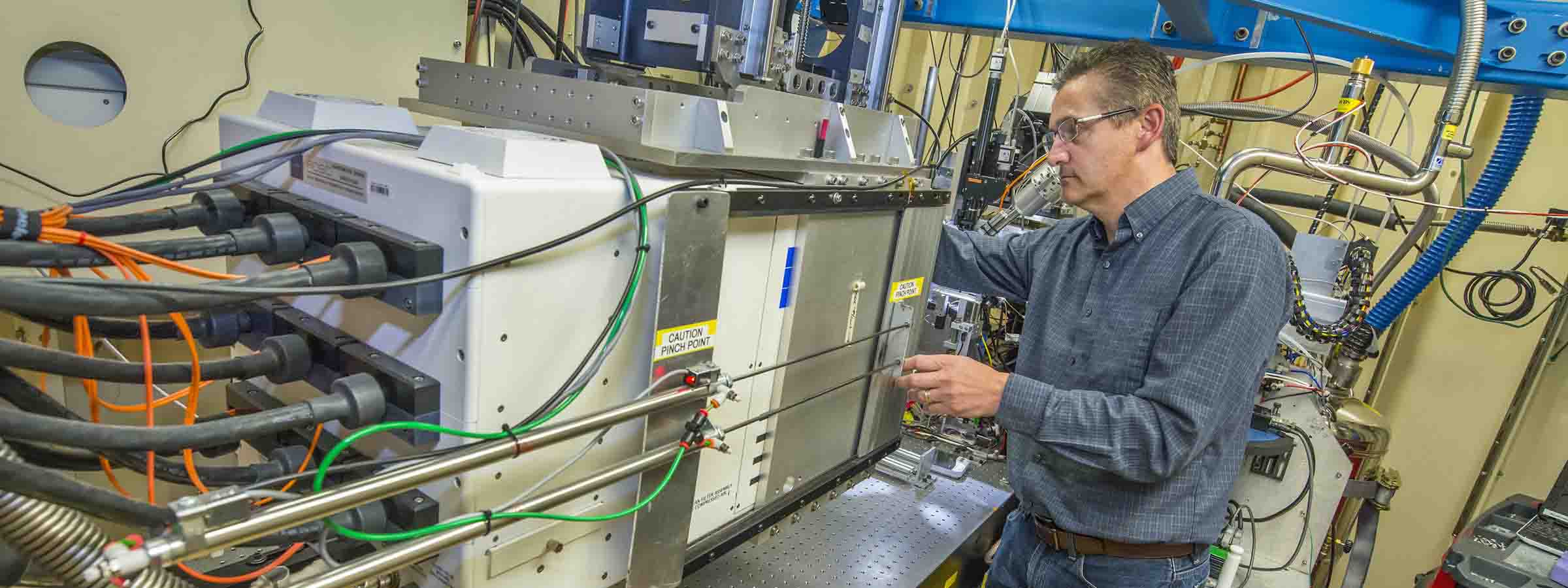
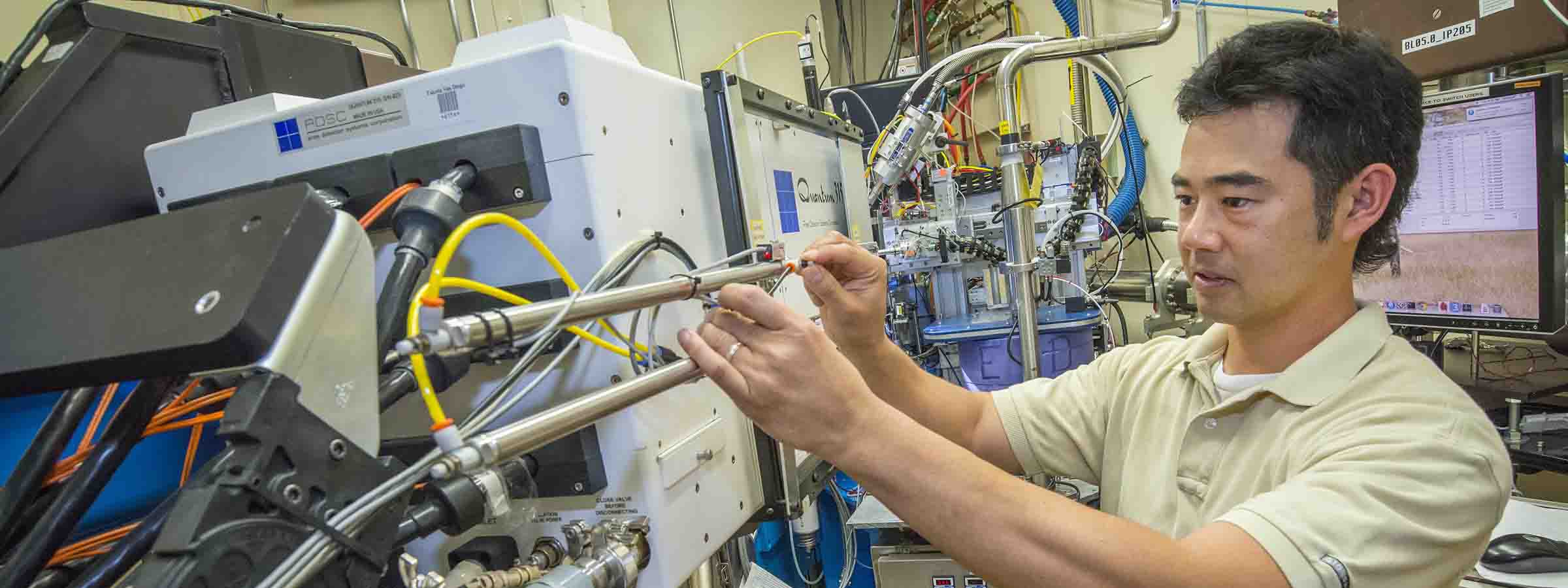
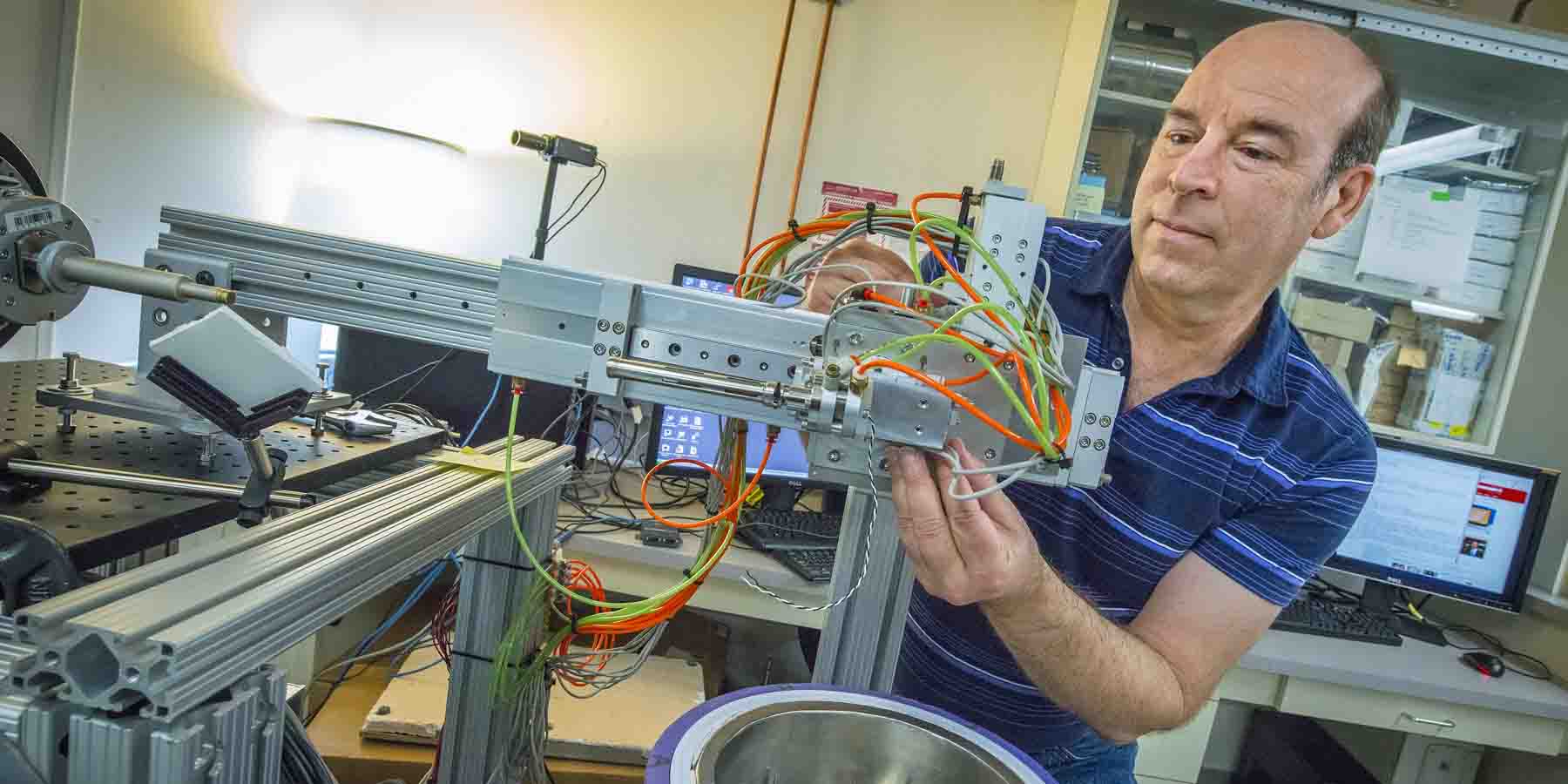
| The BCSB is midway through a two-year upgrade to Beamlines 8.2.1 and 8.2.2, the two superbend beamlines, of the five macromolecular crystallography beamlines, operated by the Berkeley Center for Structural Biology (BCSB). The improvements are designed to allow screening of, and data collection from, small crystals and will help resolve structures of large complexes. A Rigaku ACTOR robot has been installed on beamline 8.2.2, and another robot will be installed on beamline 8.2.1 in June. In addition, a microdiffractometer system (MD2) will be installed on 8.2.1 in June. Beamline optics upgrades to 8.2.1 are scheduled for 2009. |