Posts in Category: Operations
It gets worse before it gets better
The robot dewars have been taken off of 502 and 503 in order to replace the motors and perform maintenance on the stages.
Pin base warmer is coming along…
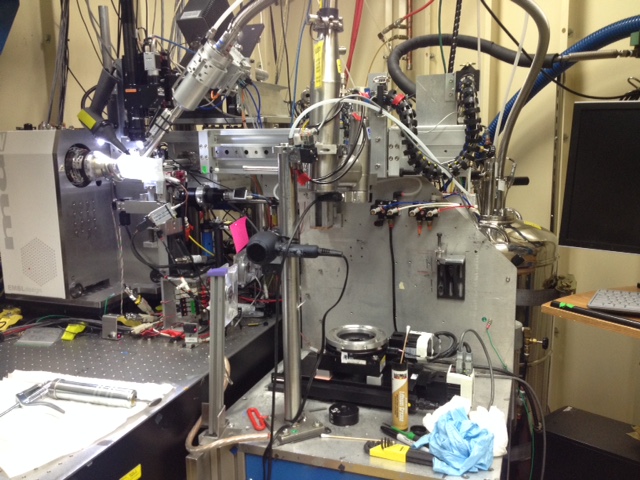
Anthony installed the first pin base warmer on 5.0.2 today. We have to wait until the ALS has LN restored before we can test it. One thing to note: the people we spoke to at NE-CAT about their pin base warmer told us that it does not actually solve the icing issue completely. They still do see pins move on the goniometer after mounting. Hopefully the warmer will help a bit, though!
And… it works!
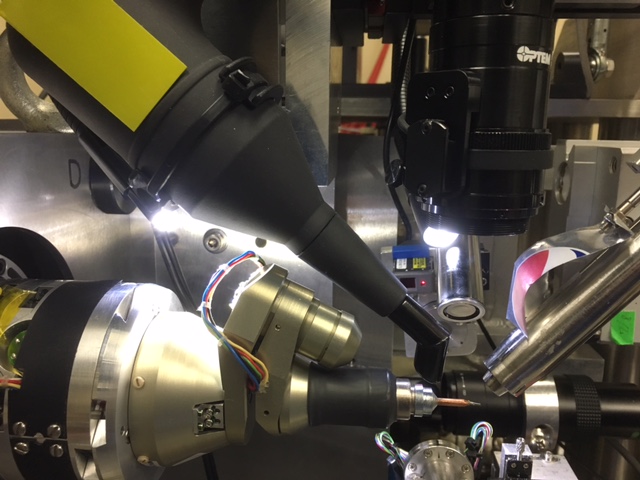
Marc collected a lysozyme dataset with the new Pilatus 6M detector. All modules are good.
New Pilatus 6M has arrived
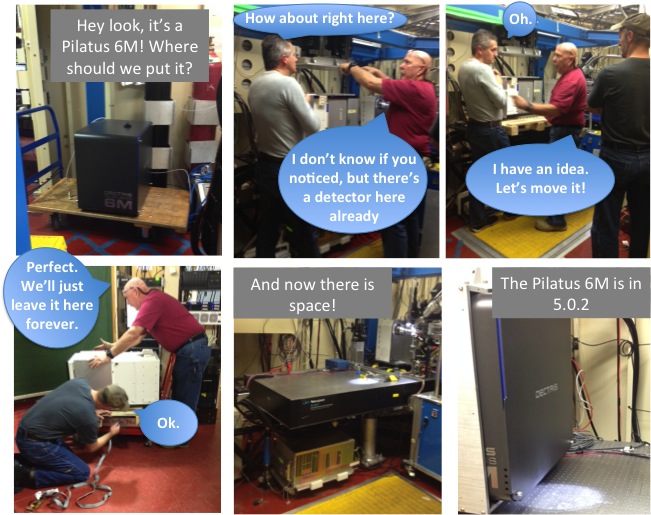
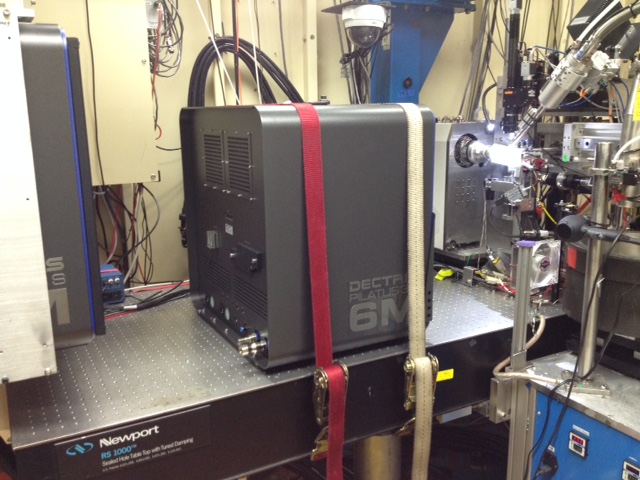
The new Pilatus3 6M detector has arrived and is on the optical bench at 5.0.2, ready for testing tomorrow when we get light!
a new SULI student at the BCSB
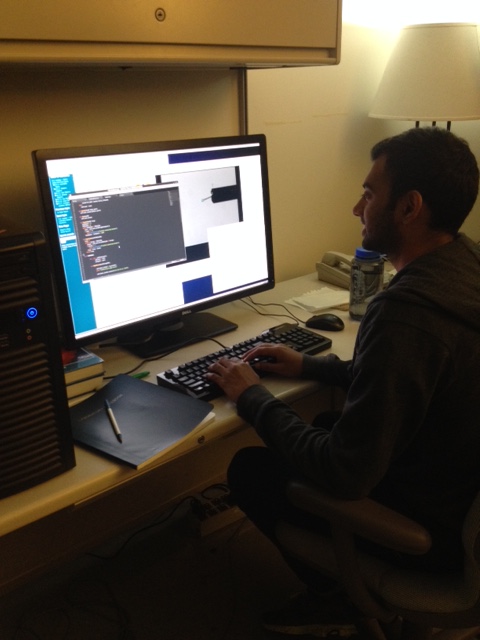
A special welcome to our SULI student, Sayan Roychowhury, who is majoring in Electrical Engineering and Computer Science at the University of Illinois. He is here with us for the fall term, and writing code to process visual images of protein crystals and center them automatically in the x-ray beam. SULI is the Science Undergraduate Laboratory Internship program in which the host lab (in this case, LBNL) pays for a student to work for a few months to gain experience at a national lab and to encourage students to remain in STEM fields.
The Diode Beamstop is a finalist for the R&D100 Award
The compact dynamic beamstop (formerly known as the diode beamstop) has been announced as a finalist for this years R&D100 award! Simon Morton and Diane Bryant are invited to the Awards Banquet in Washington DC later this year.

BCSB teams up with other ALS scientists at the ACA
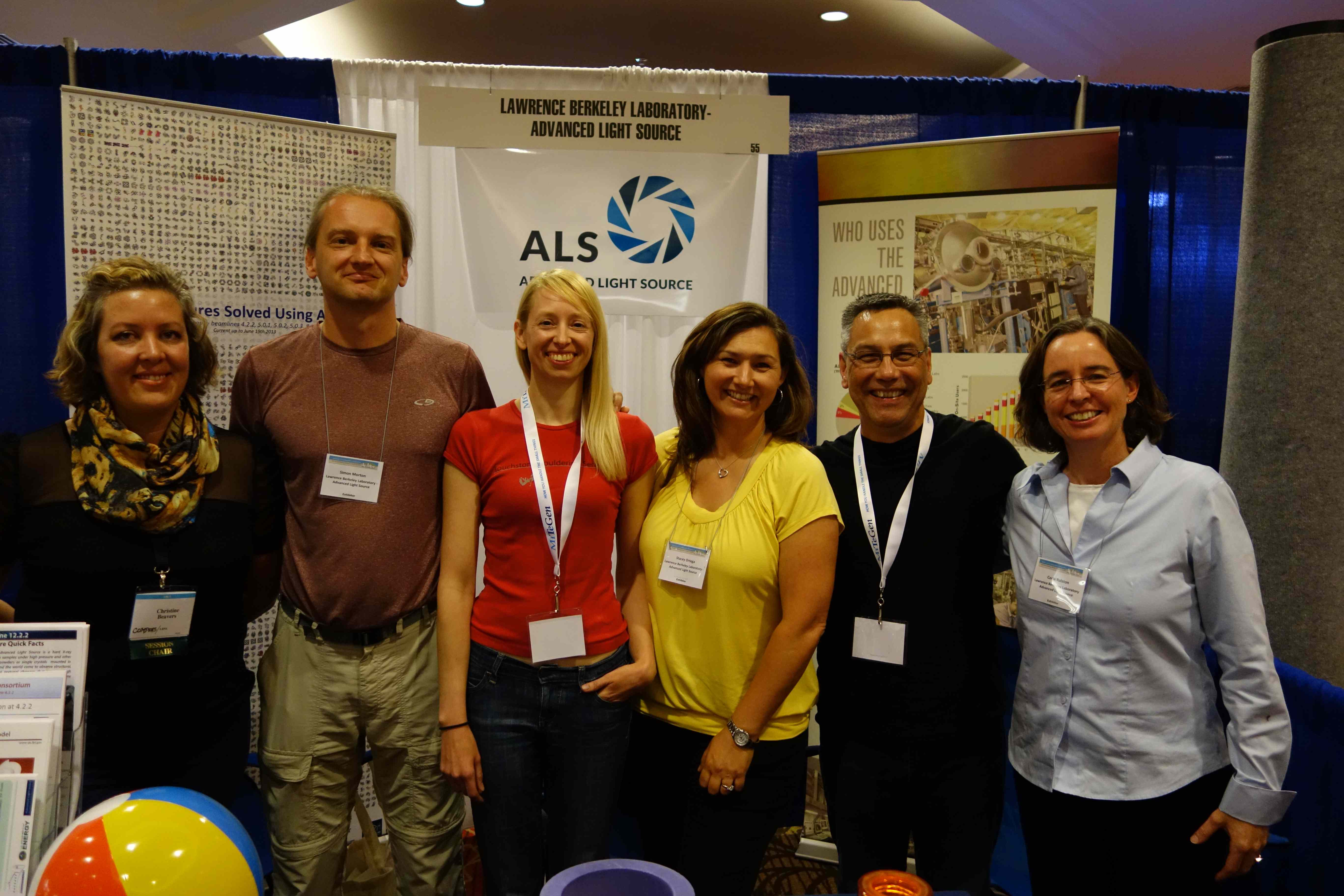
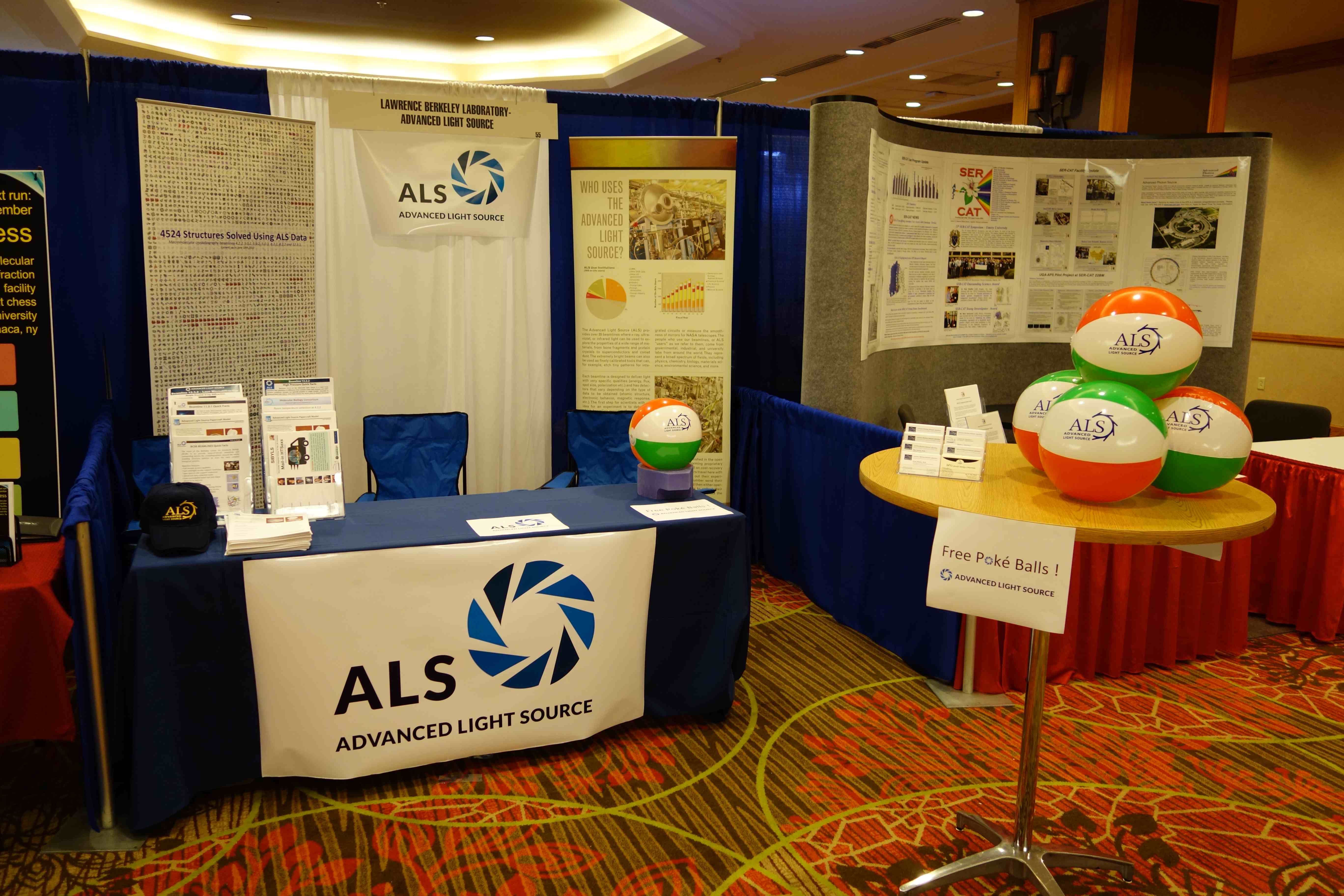
Several BCSB staff teamed up with other ALS beamline scientists to represent the ALS at this year’s American Crystallographic Association meeting in Denver. In the picture are from left to right: Christine Beavers, Simon Morton, Diane Bryant, Stacey Ortega, Jay Nix, Corie Ralston:
Pilatus on 5.0.2 has two new modules
Dectris was here at the ALS during the recent 2-bunch mode, and re-installed two of the modules on the Pilatus detector on beamline 5.0.2. Users may not have noticed, but the detector was previously missing panels on the far edges. These are now in good working order, and several test data sets have been collected successfully.
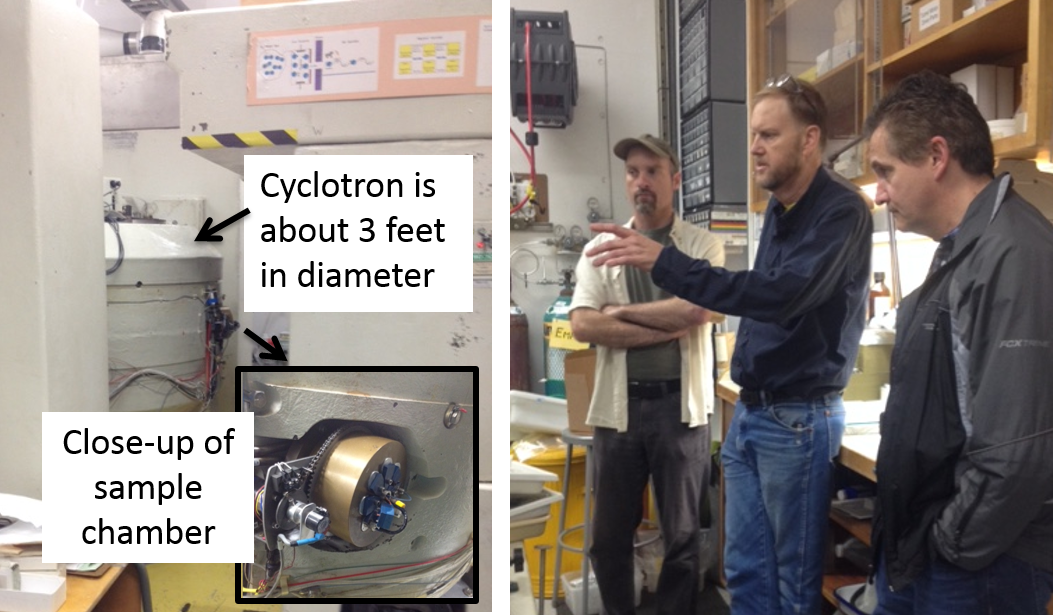
Berkeley’s Mini-Cyclotron
It turns out there is a small cyclotron at LBNL! It is used to produce medical isotopes used for PET scans. Some of the BCSB staff were lucky enough to be invited on a tour of the cyclotron, which is in building 56, not too far away from our more familiar synchrotron in building 6.