And… it works!
Marc collected a lysozyme dataset with the new Pilatus 6M detector. All modules are good.
Marc collected a lysozyme dataset with the new Pilatus 6M detector. All modules are good.
The next test is to run the 501 and 502 Pilatus detectors simultaneously off the same PPU.
We are very pleased to now have Daniil Prigozhin in the BCSB. He comes to us with a strong background in crystallography, both growing crystals and solving structures. He completed his PhD work with Dr. Tom Alber at UC Berkeley in 2014, then did a post-doc with Dr. Yorgo Modis at the University of Cambridge,…
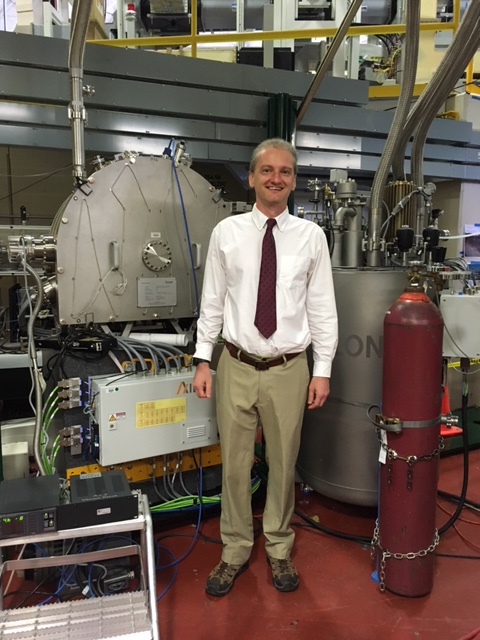
Simon in a tie! Must be review time for the ALS-U…
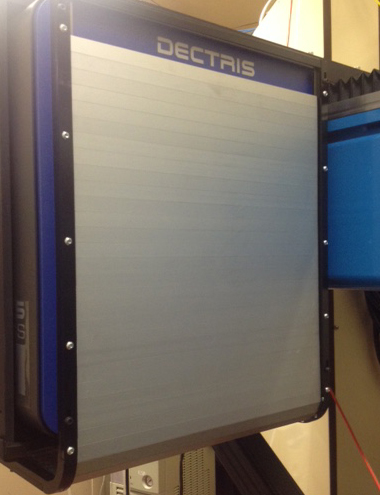
Dectris was here at the ALS during the recent 2-bunch mode, and re-installed two of the modules on the Pilatus detector on beamline 5.0.2. Users may not have noticed, but the detector was previously missing panels on the far edges. These are now in good working order, and several test data sets have been collected…
It turns out there is a small cyclotron at LBNL! It is used to produce medical isotopes used for PET scans. Some of the BCSB staff were lucky enough to be invited on a tour of the cyclotron, which is in building 56, not too far away from our more familiar synchrotron in building 6.
ALS is down for the month of July and the first week or so of August. We are taking the opportunity to do a bunch of preventative maintenance on our beamlines. Some of the items include: – cleaning the Be window on 502 (may help to decrease scatter in images) – replacing air lines –…